
Know Thyself, Part 1
The Social Monk, Part 4: The Outer Becoming

I moved to a different school seven times between first and twelfth grade.
Each time, it was a new town, a new environment, and new people. Each time I adapted, I also learned something quieter, how to fit in without standing out too much. That is where becoming began for me.
Before I knew how to explain identity, I knew how to enter a new classroom. I knew how to read unfamiliar faces, listen for accents, notice lunch boxes, learn new jokes, and understand when I belonged and when I was still finding my place.
A new school teaches you more than subjects. It teaches adjustment. It teaches observation. It teaches you how to change into a new person without announcing that you are becoming someone new.
At the time, I did not think of it as anything special. It was simply life.
Only later did I understand that I was being trained in one of the biggest lessons of my life:
Learning and unlearning.
Adapting and readapting.
Becoming and unbecoming.
Every chapter seemed to ask me to learn something new, but also to release something old.
That is the part we do not always talk about enough. Growth is not only about adding more knowledge, more identity, more confidence, or more achievement. Sometimes growth is subtraction, undoing a belief, releasing a role.
Sometimes it is realizing that the version of you that helped you survive one season may not be the version that serves you in the next one.
Maybe knowing yourself is not about arriving. Maybe it is about learning to move.
The Foundational Years
My childhood was not in one language.
English was the main language in most of my schools. It was the language of classrooms, textbooks, exams, and report cards.
Because I changed schools, cities, and states, I also picked up different Indian languages and scripts along the way.
Hindi was my mother tongue. Then came Assamese, Bengali, Sanskrit, Marathi, and different dialects of Hindi like Bhojpuri, Maithili, and Awadhi. I could follow Bengali and Sylheti in conversation, and later Haryanvi and Punjabi too, because when you live in Delhi, it is in the air. You breathe it in.
I learned how to speak and understand these languages, but I also learned how to read some of them. Learning a new script while learning a new language can be difficult. But by looking for patterns and noticing similarities, like Assamese and Bengali having only a few character differences, and Marathi, Hindi, and Sanskrit sharing a common base, it became easier to understand and follow them.
Looking back, I can see how the brain learns to adjust, translate, and recognize patterns long before we know how to name what is happening. Languages taught me that the same meaning can travel in many different sounds, depending on where you are and who you are speaking with.
Life does the same. We carry the same core self within us, but every new place, role, and season asks us to express it a little differently.
The Stories That Raised Me
While language taught me how to listen and adapt, stories taught me how to interpret what I was seeing.
Fables, folk tales, moral stories, Panchatantra, Tenali Rama, stories from Chandamama, and the stories my grandmother read to us became some of the main influences of my childhood.
These stories taught me that intelligence mattered, appearances could be deceiving, and one should not judge a book by its cover. Greed often exposed itself. Kindness had power. Cleverness could rescue people when strength could not. In The Tortoise and the Hare, patience and consistency mattered more than speed. In many stories, listening to wisdom could prevent unnecessary losses.
Years later, I came across Dr. Srikumar Rao’s work on personal mastery and smiled. His work brings ancient wisdom and reflective practices into business-school spaces like Columbia and London Business School.
It reminded me that stories have always been one of the simplest ways to teach complicated things: human behavior, decision-making, resilience, wisdom, and how to move through life.
They were not just entertainment. They became a kind of expectation, or maybe even a roadmap, for how life could be understood and how a person could choose to move through it.
The strong person was not always wise. The simple person was not always foolish. The quiet one could be powerful. The clever one could be kind or manipulative. A problem could have more than one solution. A person could be both soft and sharp.
Those stories helped me understand basic human behavior. Maybe that is what later drew me toward the more complicated side of people. Maybe that is why coaching, reflection, and pattern recognition feel natural to me now.
Before I studied health, behavior change, brain health, or coaching, those stories had already done some of the groundwork. They had already taught me to ask:
What is really happening here?
What is the lesson?
And what kind of person do I want to become from this?
Assam, Chai, and the Language of Belonging
A big part of my childhood was spent in Northeast India, in Assam, one of the Seven Sister states.
Rain, hills, and weather that was rarely too hot or too cold. A place perfect for growing tea and drinking tea.
It was also the place of dragonflies.

I remember them from those peaceful childhood days when life felt simpler, softer, and less complicated. Before everything had to be understood, explained, achieved, or figured out. Dragonflies still remind me of that time, when joy could be as simple as watching something delicate move through the air.
Now dragonflies mean more than memory. A dragonfly can move forward, backward, sideways, and still hover in one place. There is something about that design that inspires me. Life has often asked me to move like that too, to go forward, to return, to pause, to adjust, and somehow keep my balance.
That is why I love them. For me, dragonflies carry memory, meaning, inspiration, and something spiritual. Not in a complicated way, but in the way nature sometimes teaches without speaking. You just have to listen.
Assam tea became another memory trigger.
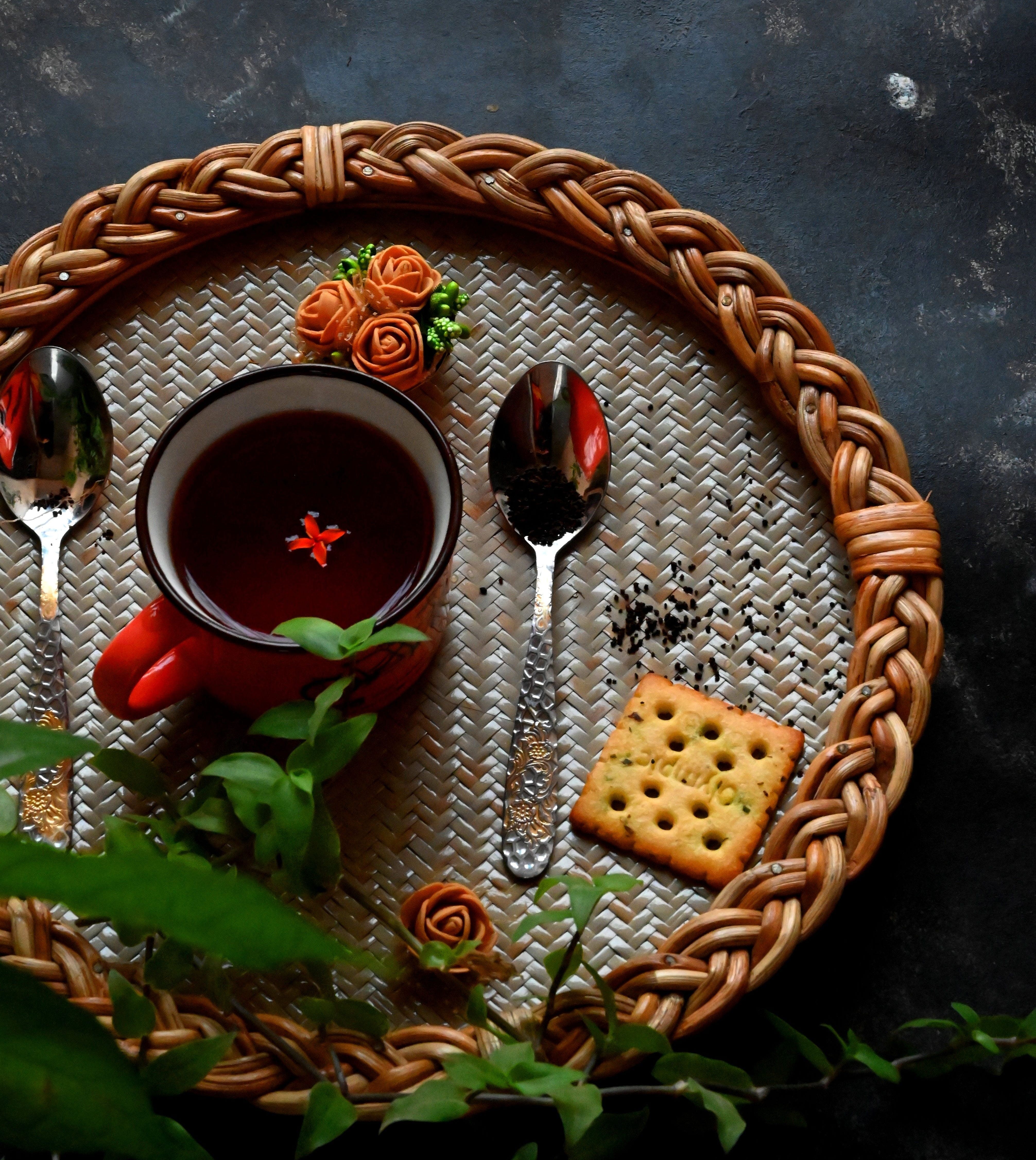
When people get to know me, they eventually learn that I am serious about my chai. And to this day, Assam tea still feels personal to me. There is something about it that feels strong, warm, grounding, and familiar.
For me, chai is not just chai. It carries Assam, childhood, rain, conversations, and the comfort of something familiar.
Assam also enriched my language palette.
In the part of Assam where I grew up, many people spoke Bengali or Sylheti. Friends would call me “Shaatee” instead of Swati and tease me because my Bengali came with a strong Hindi accent.
One of my friends would say, “Aar Bangla bolbina, sojho hochhe na,” which was her way of saying, “Please don’t speak Bengali, I can’t tolerate it.”
Not very motivating words.
And still, when she asked, I would sing for her, because she loved Hindi songs.
That is the funny thing about belonging.
It is not always perfect pronunciation. Sometimes it is mispronounced names, strong accents, teasing, laughter, and shared songs.
You can carry an accent and still carry affection.
You can speak imperfectly and still be included.
You can be laughed at lovingly and know you have a place.
That is another duality I learned early.
Difference does not always mean distance. Imperfection does not cancel connection. Learning does not make you less worthy of belonging.
Northeast India gave me dragonflies, tea, and a richer language palette. It gave me some of my earliest memories of peace and warmth, and some of my earliest lessons in difference and belonging.
The Commentary That Came With Growing Up
School and college came with their own little universe.
Annual functions, farewells, favorite teachers, strict teachers, and of course, the commentary package that comes with growing up.
Hair.
Skin tone.
Marks.
Attention that often brought tension.
In 10th grade, during farewell, everyone received a comment. Mine was:
“Baal hai ki makdi ke jaal?”
“Is that hair, or a spider web?”
At that time, nobody really knew what to do with curly hair. My mother often thought I was not combing it properly, or not combing it at all. But instead of looking tidy, combing curly hair only made it bigger and more dramatic.
Now we have curly hair routines, products, tutorials, and entire communities. Back then, it was simply called messy.
In 12th grade, the comment changed:
“Gore rang pe itna guman na kar, gora rang college mein nikal jayega.”
“Don’t be so proud of your fair complexion; it will fade once you get to college.”
In a culture that values fair skin, it felt like my face needed commentary. Either way, I had done nothing to earn my skin tone.
These were framed as jokes, but they stayed in my memory as comments on my features. Attention did not always feel neutral. Not because being seen was wrong, but because being seen often came with opinions, teasing, and unnecessary attention.
Somewhere along the way, I think I learned to shrink and hide.
To stay useful, but not too visible.
To do the work, but stay behind the curtain.
Visibility often felt like it came with trouble.
I remember once being voted “Most Popular Junior.” Instead of enjoying it, I disappeared for days so I would get disqualified and not be noticed.
At that time, hiding felt like safety.
Now it feels more like an old coat I have outgrown.
As a coach, a writer, and a woman with a voice, hiding is no longer the highest form of safety.
To serve, I have to speak.
To reach the women who may need my words, I have to allow myself to be known.
This is not confidence arriving all at once. It is me preparing myself, talking myself into the next version of my life.
Change is painful, especially when the self-made cage once kept you safe. But knowing thyself is also knowing when an old protection has become too small for the person I am becoming now.
Now it is about learning to become comfortable with unhiding.
Not hiding my voice.
Not shrinking my presence.
Not apologizing for being seen.
Not mistaking old shackles for safety.
Germany, America, and the Art of Unlearning
Later in life, I never imagined I would speak German.
But life has a sense of humor.
Germany’s integration process made language learning part of belonging, so I studied up to B1. Somewhere along the way, I was even appreciated for having a clear accent.
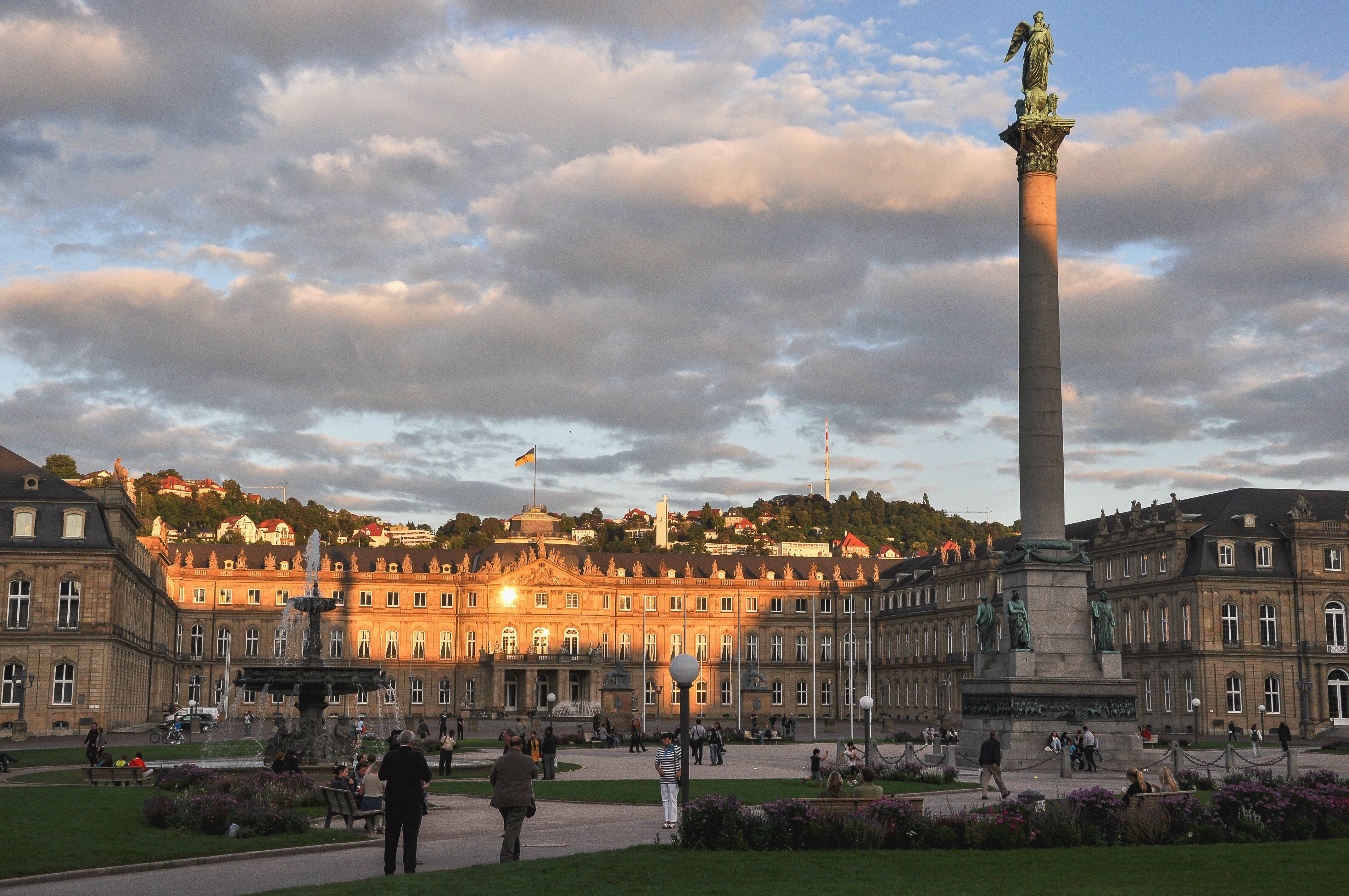
But Germany was not only about language.
The social connections I built in Germany opened new possibilities for me. Meeting people, learning the system, understanding the culture, and participating in the integration process changed me for the better. I learned how to network, connect with people, and appreciate different ways of living.
It was not only about learning German. It was about learning how a society thinks, organizes itself, respects rules, respects time, and gives space for a person’s voice. That became a life-changing experience.
Then I moved to the United States, and American English arrived with its own personality.

OooWee.
The transition began with me speaking in a very mixed way, mostly English, with German words appearing here and there. I had grown up with British and Indian English, so suddenly I had to notice that even familiar words did not always travel the same way.
A polythene bag became a plastic bag.
A dicky became a trunk.
Spectacles became glasses.
A rubber became an eraser.
A lift became an elevator.
A dustbin became a trash can.
Tiffin became a lunch box.
Even ordinary words sounded different in a new accent. Words like “cloth” and “body” reached my ear differently. The English I had grown up hearing carried one sound, while American English carried another. The word was familiar, but the sound was not.
So I guess life kept giving me the same homework in different countries:
Learn this.
Unlearn that.
Adjust again.
Laugh at yourself a little.
And keep going.
Before getting better at anything, there is usually some jumbling and messiness. Sometimes I mixed words. Sometimes I carried German into English. Sometimes I had to pause and translate myself before speaking.
Every new city, state, country, language, and system enriched me in its own way. It made me sharper at noticing differences, not only in words and accents, but in how people think, behave, connect, and express themselves.
It also helped me accept diversity more deeply. Underneath the different languages, customs, and behaviors, there is still a human being with familiar feelings, needs, fears, hopes, and lived experiences. The expression changes, but the human core is often very similar.
When you are learning to integrate, you begin to notice these intricacies more delicately. You learn the small dance of adjusting to a culture without completely losing yourself.
That skill can be applied everywhere. Over time, what I had learned by observing others also helped me observe myself, my own behavior, my own patterns of adaptation, and the many ways I was learning to understand who I was becoming.
That is why knowing myself was never going to be one clean definition. I have been shaped by many languages, many scripts, many cultures, many systems, and many beginnings.
This was the outer becoming, the visible layer shaped by places, languages, accents, rules, and reinventions.
But knowing myself was never going to stop there.
Underneath all that adapting, something else was being built: resilience, observation, patience, courage, and the ability to begin again and again.
To be continued in Part 2: The Inner Becoming.
References:
The Rao Institute: Modern Wisdom, Ancient Roots
The Rao Institute: Dr. Srikumar Rao / Creativity & Personal Mastery
Beautifully written. 7 schools, 7 cities, new languages, new friends every single time and you still showed up. Still figured it out. Still found ways to motivate yourself when it would’ve been easier to just shut down.
That’s not easy. Most people don’t see how much strength it takes to start over again and again. You did it. And now you’re using all of that to help others. Really admire that. Thank you for sharing this.
As a fellow curly haired person, I used to straighten my hair every single day in middle school because all the other girls had straight hair. Now I embrace the curls!!!!! It's so feeing when you truly embody your authentic self. I absolutely loved this piece thank you for sharing your story Swati. <3